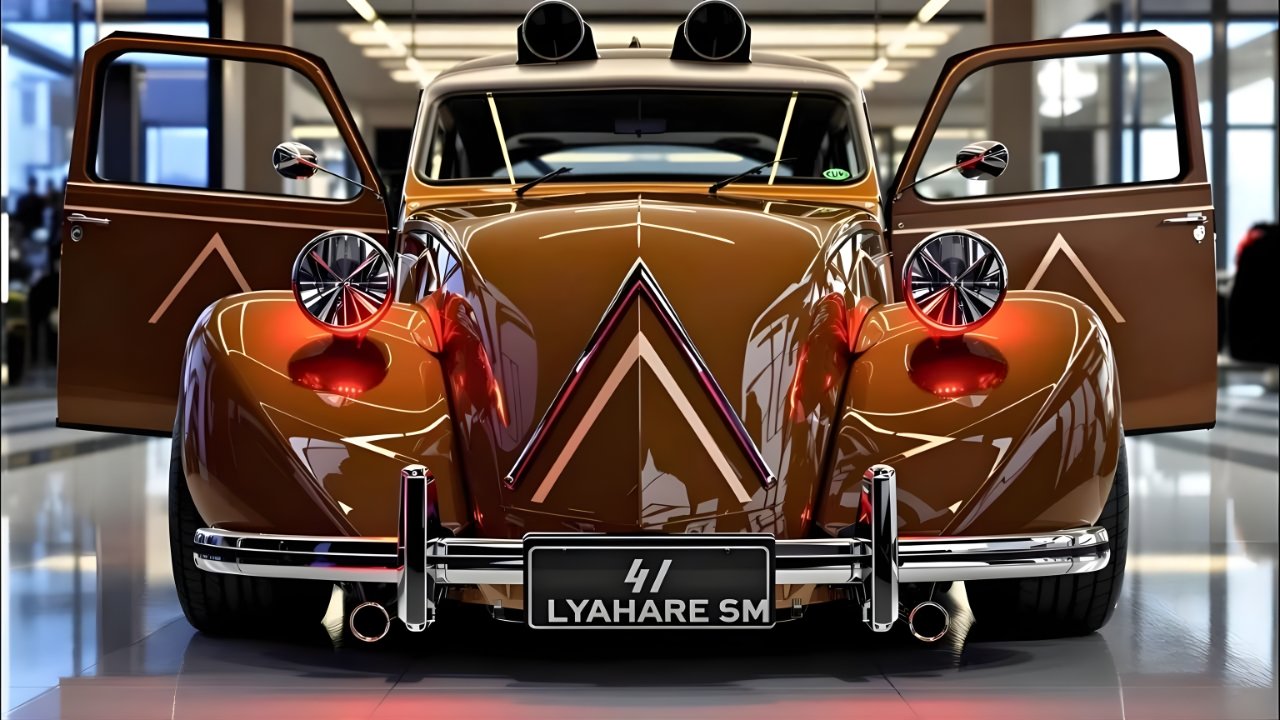
The Citroën 2CV Sahara is one of the most unusual yet iconic vehicles ever created. Known for its quirky design, remarkable off-road capabilities, and unique engineering, the 2CV Sahara captured the imagination of adventurers and automotive enthusiasts alike. Originally designed for harsh terrains and remote areas, this vehicle proved that creativity and practicality could merge to produce a car that was both innovative and fun.
Launched during the 1960s, the 2CV Sahara was designed to tackle challenging landscapes that conventional vehicles of the era could not. Its dual-engine system, lightweight frame, and high ground clearance allowed it to traverse deserts, mountains, and rural roads with ease. Over the decades, the 2CV Sahara has become a collector’s item, celebrated for its ingenuity, durability, and unconventional charm.
What Exactly Is the Citroën 2CV Sahara?
The Citroën 2CV Sahara is a two-wheel drive, dual-engine off-road vehicle developed to conquer rough terrains that typical vehicles could not handle. It features a front and rear engine, each powering one set of wheels, effectively giving it all-wheel drive capability long before such technology became mainstream.
IBR technology in the context of the 2CV Sahara refers to its innovative dual-engine setup that allowed power distribution between the front and rear axles. This made the car versatile in various terrains, from sandy deserts to muddy trails, without requiring additional modifications or heavy machinery. Each engine had its own fuel tank, which extended the vehicle’s range, making it suitable for long-distance expeditions in remote areas.
With its minimalistic design, lightweight body, and simple mechanics, the 2CV Sahara combined practicality and resilience. Despite its small size, the car could carry passengers and cargo efficiently, making it a favorite for rural communities and adventurous travelers.
Design and Build
The 2CV Sahara’s design is intentionally simple yet highly functional. It retains the classic 2CV silhouette, with a rounded roof, flat fenders, and a lightweight frame. However, it stands out due to its higher ground clearance and rugged suspension system, which make it capable of handling rough roads and uneven surfaces.

The vehicle’s body is reinforced in key areas to withstand off-road stresses, while its lightweight construction ensures agility and fuel efficiency. Large wheels with off-road tires provide grip on loose surfaces, and the dual-engine setup ensures continuous power delivery even if one engine fails. The Sahara’s interior is utilitarian, with durable materials and minimal frills, focusing on practicality and functionality rather than luxury.
Engine and Performance
The Citroën 2CV Sahara is powered by two small air-cooled engines, one at the front and one at the rear, each producing about 12 horsepower. While modest by modern standards, this dual-engine configuration allowed the car to tackle steep inclines, sand dunes, and muddy paths with surprising ease.
Each engine could operate independently or together, providing the equivalent of all-wheel drive without the complexity of a traditional drivetrain. The dual-engine system also enhanced reliability, as the car could continue moving even if one engine failed. With a top speed of around 100 km/h on flat roads and excellent torque for off-road conditions, the 2CV Sahara was a practical and capable vehicle for its time.
Off-Road Capabilities
The 2CV Sahara’s off-road performance was revolutionary. The dual-engine system, high ground clearance, and lightweight design allowed it to navigate areas that many conventional cars could not. It excelled in sandy, muddy, and rocky terrains, making it ideal for rural regions and exploration missions.
Its suspension was designed to absorb shocks from uneven terrain, while the independent front and rear engines ensured constant traction. Drivers could switch between two-wheel drive and combined all-wheel drive depending on the terrain, offering remarkable flexibility for long journeys. This made the Sahara a trusted companion for adventurers, military personnel, and explorers.
Fuel Efficiency and Practicality
Despite having two engines, the 2CV Sahara maintained practical fuel efficiency for its class. Each engine had its own fuel tank, allowing extended travel without frequent refueling. The lightweight construction and minimalistic design further contributed to the vehicle’s economy.

The Sahara’s compact size made it maneuverable in tight spaces, while its cargo capacity allowed for essential supplies, making it highly suitable for expeditions or rural transportation. Its durability and low maintenance requirements ensured that it could withstand challenging conditions without frequent repairs.
Legacy and Cultural Impact
The Citroën 2CV Sahara has left a lasting legacy in automotive history. It demonstrated that innovation and unconventional thinking could produce a vehicle capable of extraordinary performance in tough environments. Its quirky design, dual-engine system, and off-road capabilities have inspired generations of car enthusiasts and engineers.
The Sahara also became a symbol of adventure and exploration. It appeared in rallies, expeditions, and media, reinforcing its reputation as a resilient and capable off-road vehicle. Collectors today prize original 2CV Saharas, and restored models often fetch high prices due to their historical significance and rarity.
Collector Value and Modern Relevance
For modern collectors and enthusiasts, the 2CV Sahara represents a piece of automotive ingenuity. Its dual-engine system, simplicity, and off-road performance make it a unique and valuable collector’s item. Many classic car enthusiasts appreciate the car’s heritage and the way it pushed engineering boundaries at the time.
While modern off-road vehicles offer more power and technology, the 2CV Sahara remains relevant as an example of functional design, reliability, and creative engineering. It highlights the era when innovation often involved clever solutions rather than complex electronics.
Final Verdict
The Citroën 2CV Sahara is more than just a quirky car; it is a testament to innovation, practicality, and adventurous spirit. With its dual-engine system, rugged design, and off-road capabilities, it revolutionized the way people approached exploration and rural transportation.

Its unique combination of simplicity, reliability, and off-road performance ensures that it continues to be celebrated decades after its original launch. For collectors, automotive enthusiasts, and adventure lovers, the 2CV Sahara represents a rare and fascinating chapter in car history.
Disclaimer
This article is intended for informational purposes only. Specifications, features, performance, and pricing of the Citroën 2CV Sahara may vary depending on model year and location. Prospective buyers or collectors should verify details with official sources or automotive experts before making decisions.
